
Essential Pages for Your Blog

Learn about the crucial pages every digital magazine should have, including About, Contact, and Privacy Policy.
Creating a Cozy Design

Tips for designing a cozy, sophisticated layout that feels human-centered and inviting for your readers.
Minimalist Aesthetic in Blogging

Learn how a minimalist aesthetic can enhance your digital magazine’s appeal and user experience.
Mysteries That Captivate

Explore how to weave mysteries into your content to keep readers intrigued and coming back for more.
The Power of Personal Stories

Discover the impact of personal stories in engaging your audience and building a community around your digital magazine.
Creating a Digital Magazine

Learn how to design a stunning digital magazine that captivates your audience with a minimalist aesthetic and elegant typography.
Lucky
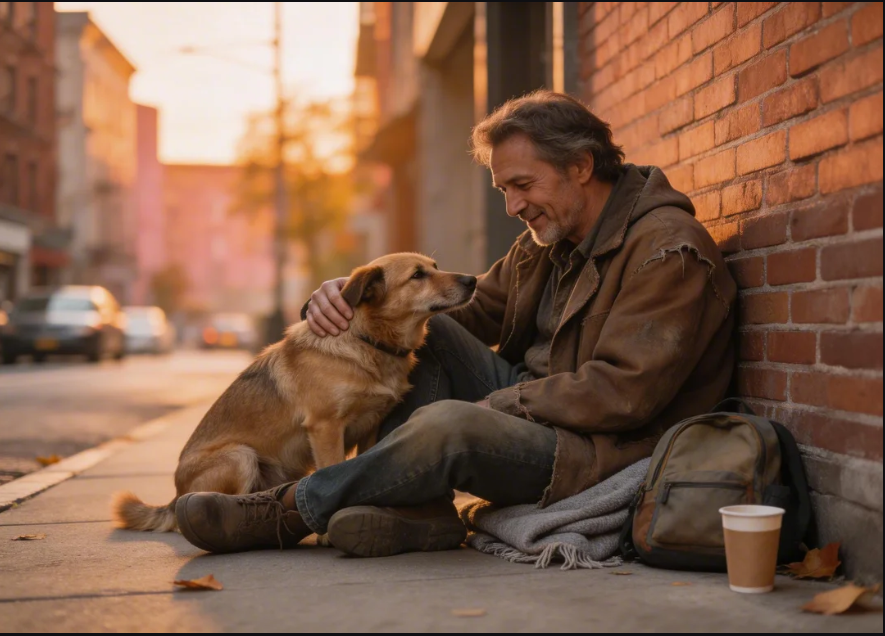
Lucky Raymond had a system. He’d learned it over eight months on the streets—which corners got foot traffic, which times of day people were generous, which neighborhoods were worth the walk. He’d learned to keep his sign simple, his eyes down, his presence small. People gave more when they didn’t feel confronted. They still mostly didn’t give. He’d been a warehouse supervisor once. Eighteen years with the same company before the layoffs came and took everything with them—the job, then the savings, then the apartment, then the marriage, though that last one had been dying long before. He was fifty-three years old and invisible in a way he hadn’t known was possible until it happened to him. Some days he made twelve dollars. Some days less. He ate at the shelter on Clement Street when there was space, and when there wasn’t, he ate whatever he could stretch his change to cover. He was not a drunk, not an addict, not dangerous. He was just a man that life had put down and hadn’t helped back up. Nobody saw the difference. He found the dog on a Wednesday in October, behind the dumpsters outside a Thai restaurant on Morrison Street. Small, brown, some kind of terrier mix with a torn ear and ribs you could count. No collar. Eyes that tracked Raymond with the particular wariness of an animal that had been hurt before and was deciding whether to run. Raymond crouched down slowly. “Hey,” he said quietly. “I’m not going to hurt you.” The dog watched him. “I don’t have much,” Raymond said, reaching into his jacket pocket. Half a granola bar, slightly crushed. He broke off a piece and held it out on his palm. The dog took one careful step forward. Then another. Then ate the granola bar from his hand with surprising gentleness. Raymond sat down on the cold pavement and let the dog sniff his jacket for a long time. Eventually, the dog climbed into his lap, turned twice, and settled. Raymond hadn’t been warm in months. “Alright,” he said softly. “I guess we’re doing this.” He named him Lucky, mostly as a joke. Neither of them was, particularly. But the name stuck. The change happened so gradually that Raymond almost didn’t notice it at first. People stopped. Not for him—he understood that quickly enough. They stopped for Lucky, who sat beside Raymond’s cup with his torn ear and his patient eyes and his complete, unconditional presence. Women crouched down to pet him and stood up reaching for their wallets. Men who had walked past Raymond for months without a glance stopped to ask what his name was, how old he was, what kind of mix he was. “He’s lucky,” Raymond would say, and mean it differently every time. A woman named Carol who worked at the bakery two blocks over started bringing two coffees in the morning—one for Raymond, one bowl of water for Lucky. A teenager who passed every day on his way to school started stopping to sit with Lucky for five minutes, not saying much, just resting his hand on the dog’s back with the particular relief of someone who needed exactly that. Raymond watched all of it and felt something shift inside him. It wasn’t the money, though the money helped. It was something harder to name. Lucky needed feeding, needed walking, needed care. For the first time in eight months, Raymond woke up in the morning because something needed him to. Purpose, it turned out, didn’t ask where you were sleeping. Three months after he found Lucky, a man named Dennis stopped at Raymond’s corner. He was older, heavyset, with the look of someone who had built things with his hands his whole life. “That your dog?” Dennis asked. “Yes, sir.” Dennis watched Lucky for a moment. “I run a logistics warehouse out on the east side. Lost my floor supervisor last month.” He looked at Raymond directly—not through him, not past him. At him. “You look like a man who knows how to work.” Raymond was quiet for a moment. “I was a warehouse supervisor for eighteen years,” he said. Dennis nodded slowly. “You got somewhere to clean up?” “I can find somewhere.” Dennis reached into his wallet and handed Raymond a card. “Monday. Seven a.m. Don’t be late.” Raymond looked at the card for a long time after Dennis walked away. Lucky put his chin on Raymond’s knee. “What do you think?” Raymond asked him. Lucky’s tail moved once, slowly, like a period at the end of a sentence. Raymond started on a Monday. It wasn’t a perfect ending—those only existed in movies. The work was hard and the pay was modest and he still had a long road back to anything resembling his old life. But he had a room in a boarding house now, a worn blanket on a real bed, and Lucky curled at his feet every night like a small, warm anchor. He thought sometimes about the version of himself from a year ago—the one who had learned to make himself invisible, who had stopped expecting anyone to see him. Lucky had seen him. And somehow, through Lucky, other people had too. He reached down in the dark and scratched behind the torn ear. “Good boy,” he said quietly. Lucky sighed in his sleep, content and certain in the way that only dogs could be—like the world was exactly the right size, and everything in it was exactly where it was supposed to be.
The Truth Behind Closed Doors

What the Roses Saw Elena had learned early on that wealthy houses had secrets. She had worked for the Hargrove family for three years, and in that time she had become invisible in the way that only household staff could be—present enough to keep things running, forgettable enough to be spoken around freely. She knew which floorboards creaked, which cabinet doors swung open silently, and exactly when Mr. Hargrove took his morning coffee on the back terrace. That last part was the one she looked forward to most. She wasn’t proud of it. Daniel Hargrove was a married man, and Elena was practical enough to know that her feelings were a complication she couldn’t afford. But he was also the only person in the house who said good morning like he meant it, who remembered her mother was sick and asked after her by name, who treated her like a person rather than a function. His wife, Claudia, was another matter entirely. Elena said nothing about that either. She kept her head down, polished the silverware, arranged the flowers, and stayed out of things that weren’t her business. Until the afternoon everything changed. It was a Tuesday, which was supposed to be her half day. She had forgotten her phone charger in the utility room and slipped back in through the side entrance quietly. The house felt different when it was half empty—sounds carried differently, moved through the halls in ways they didn’t when the family was fully home. She heard the voice before she reached the kitchen. It was Claudia’s laugh. Low and warm in a way Elena had never once heard her direct at her husband. She followed the sound without thinking, rounding the corner toward the sitting room, and stopped cold in the doorway. Claudia was there, leaning close to a man Elena didn’t recognize. Young. Sharp-suited. His hand rested on Claudia’s wrist in a way that left absolutely no room for interpretation. On the coffee table between them sat two wine glasses and Claudia’s phone, screen up, showing a string of messages Elena couldn’t read from where she stood but didn’t need to. Claudia looked up. For a moment, neither of them moved. “Elena.” Claudia’s warm expression evaporated instantly. “I thought you’d left.” “I forgot something,” Elena said carefully. “I’ll just be a minute.” She retrieved her charger with hands that didn’t shake—she was proud of that—and walked back out the way she came. She sat in her car for twenty minutes before she trusted herself to drive. The next week was the longest of Elena’s life. She watched Daniel at breakfast, laughing at something his daughter said, completely unaware. She watched Claudia move through the house like nothing had happened, kissing his cheek before dinner, asking about his meetings with a convincing display of interest. And Elena carried what she knew like a stone in her chest, turning it over and over, trying to find the right answer. Telling him could cost her everything. Claudia would make sure of it. She’d be out of a job with no reference, and her mother’s medical bills didn’t care about moral victories. Staying silent meant watching a good man be deceived every single day. She thought about it constantly. She prayed about it. She called her sister at midnight and whispered the whole story and listened to the silence on the other end of the line. “You already know what you’re going to do,” her sister finally said. “That’s why you called me at midnight instead of just doing nothing.” She found Daniel on the back terrace on a Thursday morning, coffee in hand, watching the garden. “Mr. Hargrove.” Her voice came out steadier than she felt. “I need to tell you something. And I need you to know that I’m telling you because you’ve always been good to me, and because I think you deserve to know the truth.” He turned and looked at her—really looked at her—and something in his expression shifted. Like he’d been waiting for something without knowing it. She told him everything. She kept it simple and factual and she didn’t embellish. When she was done, the garden was very quiet. “I understand if this affects my position here,” she said. “I just couldn’t—” “Elena.” His voice was rough. He set his coffee down slowly. “Thank you.” That was all he said. But the way he said it carried the weight of a man who had suspected something for a long time and had been carrying that alone. She handed in her notice that afternoon—it felt cleaner that way, giving him space to handle things without the complication of her presence. He tried to talk her out of it. She was firm. Her last day, he handed her an envelope with three months’ salary and a handwritten reference that made her cry in her car. She never stopped wondering if she’d done the right thing. But she knew, with the quiet certainty of someone who had chosen integrity over comfort, that she had done the only thing she could live with. And sometimes, that’s the only answer there is.
Her Mother’s Money

Vivienne Caldwell had grown up believing her father was a great man. It took twenty-six years and a manila envelope left on her desk by an anonymous source to dismantle that belief entirely. She sat in her office on the forty-second floor of Caldwell Tower—a building that bore her family name on every piece of stationary, every business card, every gleaming elevator door—and read the documents inside three times. Then she set them down, walked to the window, and looked out at the city her father had built his empire on. The numbers didn’t lie. Twelve million dollars, siphoned over eight years from the Vivienne Caldwell Foundation—named after her late mother, funded by donations from thousands of people who believed in her mother’s legacy of children’s healthcare. The money had moved quietly through shell companies and offshore accounts, ending up exactly where it always ended up when her father was involved. In his pocket. She thought about her mother. Eleanor Caldwell had died of cancer when Vivienne was fifteen, and in her final months she had poured everything she had into building that foundation. It was supposed to be her legacy. It was supposed to help children who couldn’t afford treatment. Her father had been stealing from sick children for eight years. Vivienne picked up the documents again and got to work. She had always been the quiet daughter. Her older brother Chase was the one their father groomed for leadership—loud, charming, comfortable in boardrooms. Vivienne had been handed a ceremonial role in the foundation and kept at a comfortable distance from real power. What her father hadn’t accounted for was that she had spent ten years quietly watching and learning everything he never bothered to teach her. She called her mother’s attorney the next morning. “Miss Caldwell.” Gerald Whitmore had been her mother’s most trusted advisor for thirty years. He sounded unsurprised to hear from her. “I’ve been wondering when you’d call.” “You knew?” “I suspected. But without proof—” he paused— “your mother was very specific in her instructions. There was a trust set aside that your father was never informed of. She wanted you to have it when you were ready.” Another pause. “I believe you’re ready.” Vivienne closed her eyes. Her mother had seen this coming. Had quietly, lovingly prepared for it. The trust was forty million dollars. She gave her father one chance. She met him for dinner at his favorite restaurant—the kind of place where the lighting was low and the portions were small and everything cost a fortune. He sat across from her looking exactly like what he was: a man who had never once doubted his own righteousness. “You’ve been stealing from Mom’s foundation,” she said, without preamble. He didn’t flinch. That was the thing about men like her father—they had practiced composure for so long it had become indistinguishable from innocence. “That’s a serious accusation, Vivienne.” “It’s not an accusation. I have documentation going back eight years.” She slid a single page across the table. “I’m giving you the opportunity to make it right before I take this to the board and to the press.” He looked at the paper. Something shifted behind his eyes—not guilt, she realized. Calculation. “You don’t want to do this,” he said quietly. “This family’s reputation—” “Is already destroyed. I’m just the only one who knows it yet.” She folded her hands on the table. “Make it right, Dad. Return the money. Step down. Let me fix what you’ve broken.” He leaned back and smiled the smile she had trusted her entire childhood. “You don’t have the stomach for this, sweetheart.” She picked up the document and put it back in her bag. “I guess we’ll find out,” she said, and left. The board meeting was three weeks later. Vivienne walked in with Gerald Whitmore beside her, a full audit report, and forty million dollars in verified funds ready to be transferred back to the foundation. She presented everything calmly and completely. She answered every question. She did not raise her voice once. Her father sat at the head of the table and said nothing. By the end of the meeting, he had resigned. The foundation was placed under independent oversight. The full twelve million would be repaid. Chase called her that night, furious. “You burned the whole family down,” he said. “I rebuilt it,” she replied. “There’s a difference.” She hung up and sat for a long time in the quiet of her mother’s old study, surrounded by photographs and books and the particular stillness of a room that still held someone’s presence long after they were gone. She thought her mother would have understood. Would have recognized the specific courage it took to love someone and still hold them accountable. She picked up the framed photo from the desk—her mother laughing at something, caught mid-joy—and held it for a moment. “I fixed it, Mom,” she said softly. The city hummed below the window. Somewhere out there, children were getting treatment they couldn’t afford, funded by a foundation that finally meant what it said. That was enough.
The Boy Who Fixed Ghost

Nobody at Langley Air Force Base could fix Ghost. That was what the crew called her—the F-16 that had sat in Hangar Seven for six weeks, grounded by an electrical fault that had stumped every technician on base. She was supposed to be back in rotation by now. Instead she just sat there, silent and stubborn, while grown men with decades of experience scratched their heads and argued about diagnostic reports. Twelve-year-old Eli Carter had no idea about any of that when he followed his father through the hangar doors that Tuesday morning. He just saw the plane and forgot to breathe. “Stay close and don’t touch anything,” his father said without looking back. Sergeant Marcus Carter moved through the hangar the way he moved through everything—purposeful, squared, leaving no room for argument. “I mean it, Eli. These men are working.” “Yes, sir,” Eli said. He meant it when he said it. His father disappeared into a briefing room twenty minutes later, and Eli drifted. He couldn’t help it. The hangar was the most incredible place he had ever been—the smell of hydraulic fluid and metal, the scale of everything, the particular reverence that surrounded machinery that was built to do impossible things. He had been taking apart and rebuilding engines since he was eight. Lawnmowers, motorcycles, his neighbor’s ancient tractor. Anything with moving parts spoke to him in a language he understood better than most people. Ghost spoke loudest of all. He circled her slowly, reading her the way he read everything mechanical—not with his eyes exactly, but with some instinct that lived deeper than that. He noticed the access panel on the lower fuselage that sat a quarter inch off alignment. Noticed the faint discoloration near the avionics bay that suggested heat buildup in a place heat shouldn’t be. He glanced toward the briefing room. Voices. His father was occupied. He pulled out the small multi-tool he carried everywhere and got to work. He was forty minutes in when the voice hit him like a thunderclap. “What in the—son, step away from that aircraft right now.” Chief Technician Ray Bosch was a large man with a red face and thirty years of Air Force behind him. He crossed the hangar in about four strides and planted himself beside Eli with an expression that made Eli’s stomach drop to the floor. “I found something,” Eli said quickly. “You found—” Bosch stopped. Looked at the access panel. Looked at the small, neat arrangement of components Eli had laid out on the cloth beside him. His jaw tightened. “Do you have any idea what you’ve done? Do you have any idea what could have happened if—” “The primary relay was installed with reversed polarity,” Eli said. “It’s been sending feedback into the avionics every time she powers up. That’s why the fault keeps appearing and disappearing—it’s not consistent because it only triggers above a certain power threshold.” He pointed carefully. “I rerouted it. She should run clean now.” Bosch stared at him. Then he looked at the components again. Then he looked at Eli. “How old are you?” “Twelve.” The briefing room door opened. Sergeant Carter stepped out, scanned the hangar, and went completely still when he saw his son crouched next to the open fuselage of a military aircraft with Chief Bosch looming over him. “Eli.” His father’s voice was quiet in a way that was worse than shouting. “Come here.” The conversation was short and happened in the corridor outside the hangar. Eli stood straight and took it—the disappointment, the breach of trust, the seriousness of what he’d done. His father’s voice stayed level throughout, which somehow made it worse. “You understand why this is a problem,” his father said. “Yes, sir.” “Unauthorized access to military equipment—” “Dad.” Eli met his eyes. “I fixed her. I know I did.” His father looked at him for a long moment. Then the radio on his belt crackled. It was Bosch. “Sergeant Carter.” A pause. “We ran diagnostics on Ghost. Full power cycle. Clean read across the board.” Another pause, longer this time. “Your boy found what six of my guys couldn’t find in six weeks.” The corridor was very quiet. His father looked at him—really looked at him—in a way that felt different from before. Like he was seeing something he had always known was there but had never quite focused on. “Eli,” he said slowly. “I’m sorry I disobeyed,” Eli said. “I just—I could see what was wrong. I couldn’t walk away from it.” His father was quiet for a moment. Then something shifted in his expression—the stern line of his mouth softened into something that might, in the right light, have been pride. “Where did you learn to do that?” Eli almost smiled. “From watching you fix the truck every weekend for the last four years.” His father laughed—surprised and real—and pulled him in by the back of the neck the way he did when words weren’t quite enough. Later, Bosch shook Eli’s hand like he was a colleague. The crew gathered around while he walked them through exactly what he’d found and why it worked. On the drive home, his father glanced over at him. “We’re going to need to find you a proper program,” he said quietly. “Something that keeps up with you.” Eli looked out the window at the sky—wide and open and full of things that were built, by people like him, to fly. “Yeah,” he said. “I think so too.”